Product Signals: turning a year of churn into a ranked product roadmap
- Retention diagnosis
- Portable playbook
- Evidence-gated analysis
- Built solo
Situation: Leap's churn data said who left and how much. But 60-70% of churn dollars sat in vague CRM tags that named no product-actionable cause, and the CX team confirmed those tags were unreliable in the categories that mattered.
Role: I conceived and built Product Signals solo, from the SQL ledger to the hosted dashboard the team refreshes weekly.
Key decision: When an adversarial audit showed my first-pass AI re-attribution was only ~50% accurate, I didn't ship the plausible ranking. I rebuilt it around a frozen-evidence verification gate and a five-state "controllability" partition computed from evidence, never from thresholds.
Outcome: Every churn dollar from the trailing year is now classified, and the ranked signals carry defensible retention dollars, including the honest finding that product drives only a minority of churn.
100%
Of trailing 12-month churn re-attributed
10-16%
Of churn attributable to product
Open full case study →
- Sheet
- A-01
- Year
- 2026
- Rev
- A
Lily: an AI receptionist, four hours from idea to working POC
- AI product
- Hands-on shipping
- Unit economics
- Design systems
Situation: For exterior contractors, a missed inbound call is a lost $10,000-40,000 job, and "we couldn't get anyone on the phone" kills leads daily. The market had validated AI front offices; Leap's CRM was the natural front door.
Role: I designed, built, and am hardening Lily myself (the design spec, the business case, and the code) as the first agent in Leap's AI front office.
Key decision: Scope voice-first to overflow and after-hours only, rejecting "answer every call": my unit-economics model showed voice margin compressing hard with volume, and in a $10-40K-lead vertical the ship bar is zero bad-call incidents, enforced by an eval harness of money-losing scenarios.
Outcome: A working proof of concept about four hours after the idea, and still moving. Lily is headed to its first real customer this week.
~4 hrs
Idea to working POC
Open full case study →
- Sheet
- A-02
- Year
- 2026
- Rev
- A
Buildertrend Core: fixing failure-to-launch
- Retention turnaround
- Operating model
- GTM partnership
- Vertical SaaS
Situation: Buildertrend (residential construction SaaS, ~$200M ARR, PE-backed) entered 2024 with 66% annualized logo retention in its target segment, 12% of new logos churning inside 90 days, and a new-customer experience that amounted to a blank product plus feature training.
Role: As BU head of product for Core (12 squads, ~85% of ARR), I owned the diagnosis and the fix, and embedded with the onboarding squad for a quarter to run it.
Key decision: Against real internal resistance, replace "flexible" onboarding with an opinionated, gated setup path and annual contracts: customers get actual value the first time they log in, or we've failed.
Outcome: Twelve months later: retention up seven points, early churn cut by two-thirds, and a GTM operating rhythm that outlived the project.
66% → 73%
Annualized ICP logo retention, Jan 2024 to Jan 2025
12% → 4%
Logo churn inside 90 days
~45 min
Saved per job per week, first gen-AI workflow
Open full case study →
- Sheet
- A-03
- Year
- 2025
- Rev
- A
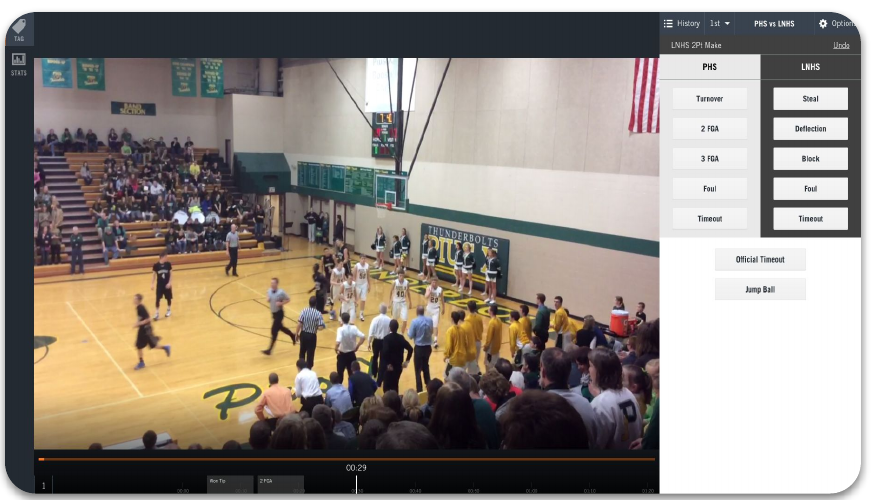
Hudl Assist: from a rough season to a new business line
- 0→1 product
- Service operations
- Pricing
- Sports tech
Situation: Hudl's 2014-15 basketball launch fell short (upload failures, rough playback, a stats tool coaches didn't love) while a pricier competitor won by doing the analytics for teams. The COO put out a call for ideas to expand market and ARR.
Role: I was the lead PM who pitched Assist, then built and launched it: coaches send game film, Hudl returns broken-down video and stats within 24 hours.
Key decision: Stop competing on self-serve tagging tools and sell the outcome instead: a vetted operations partner (crowdsourcing rejected on quality), hard SLAs, and a $600 add-on price set to read willingness-to-pay.
Outcome: Launch season hit every goal, and Assist grew into a business line Hudl still runs today.
99.81%
Of games returned in under 24 hours, launch season
15 → 54 → 65
Basketball NPS across the launch season
$25M+
ARR built during my tenure
Open full case study →
- Sheet
- A-04
- Year
- 2015
- Rev
- A
Outside-in: three companies diagnosed cold
- Cross-company diagnosis
- Strategy under uncertainty
- Interview cases
Situation: Three final-round interview processes (a CRE proptech platform, a school-sports media company, and a large collaboration-software company) each asked for a working session on their business.
Role: These were interview case studies, prepared cold, on companies I've never worked for, and labeled exactly as that.
Key decision: Diagnose before prescribing: each deck frames testable hypotheses (pricing structure, AI roadmap, org design, metrics model) with a 30-45 day validation plan, not answers pretended in advance.
Outcome: Three complete strategy artifacts built from public information and first-principles analysis; the gated version walks through the strongest one.
These are diagnosis exercises. Metrics are gated.
Open full case study →
- Sheet
- A-05
- Year
- 2025-2026
- Rev
- A